


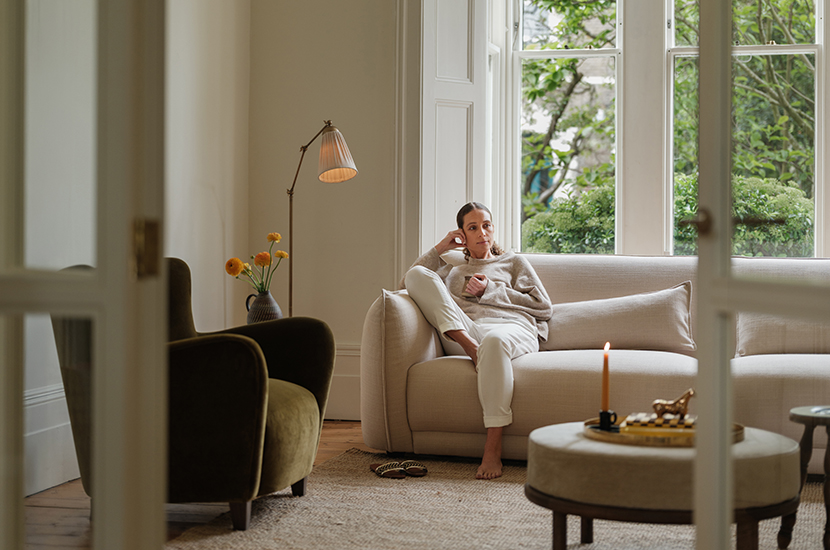
How to Choose a Sofa Colour: A Practical Guide
While it may sound straightforward, choosing your sofa colour is more than simply picking your favourite shade. We always advise our customers that before they decide, they should consider the following three things:
- How much natural light their room receives,
- How the sofa will need to work for their household,
- Whether they want it to be a statement or a backdrop
From there, we encourage them to consider the colours that will surround their new sofa. Think about the walls, flooring and other furniture that will influence how the sofa colour will appear once it’s in its new home.
This sofa colour buying guide covers every colour, from timeless neutrals to rich greens, blues, and reds, to help you narrow your options and find a colour you’ll be happy to live with for years to come.
Sofa Colours at a Glance
| Sofa colour | Overall feel | Particularly good for | Watch out for |
|---|---|---|---|
| Cream & beige | Warm, calm and timeless | Light, neutral interiors | Marks can be more noticeable |
| Grey | Versatile and understated | Contemporary schemes | Cooler greys can feel flat in darker rooms |
| Brown & tan | Warm and grounding | Natural and classic interiors | Very dark brown can feel heavy in small spaces |
| Black | Bold and sophisticated | Contemporary interiors | Dust and pale pet hair may show |
| Green | Natural and characterful | Neutral and earthy palettes | Undertones can change considerably in different light |
| Blue & navy | Calm and elegant | Classic and contemporary rooms | Dark navy needs balance in smaller rooms |
| Pink | Warm and expressive | Soft neutral or colourful schemes | Think beyond trends and choose a shade you genuinely love |
| Red | Confident and inviting | Rooms needing a focal point | Brighter reds can dominate a small space |
| Purple | Rich and individual | Statement interiors | Deep shades benefit from good natural light |
| Yellow & mustard | Warm and uplifting | Neutral, grey and blue schemes | Works best when allowed to be the focal point |
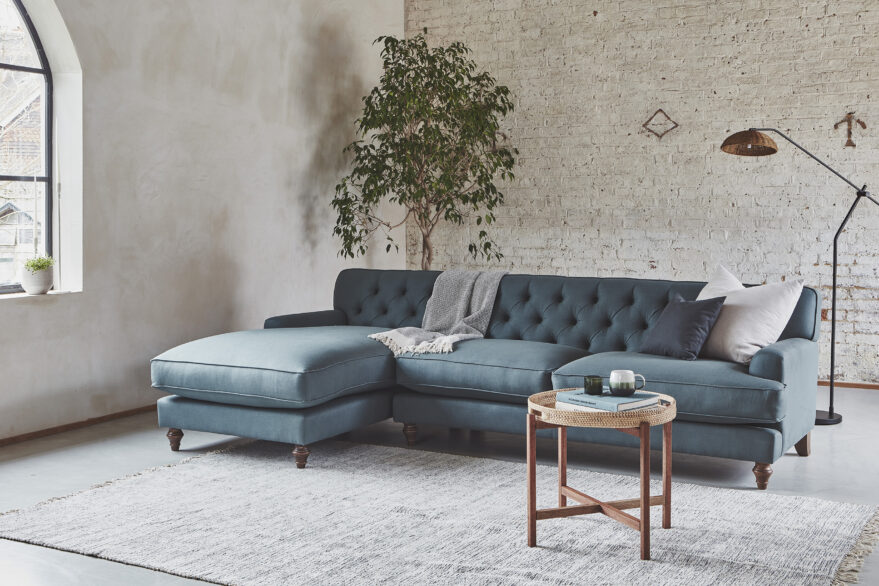
What Colour Sofa Should I Get?
If you’re struggling to decide, start with the room rather than the sofa, because colours in our showroom can look completely different in a home.
Try asking yourself four simple questions;
-
How much natural light does the room receive?
A colour that looks rich and warm in a bright showroom may appear deeper or cooler in your living room.
-
Who uses the sofa?
A formal sitting room and a family living room with children, pets and everyday lounging may have very different practical requirements.
-
Do you want the sofa to stand out or blend in?
A neutral sofa gives you freedom to change accessories and wall colours over time. A statement sofa can become the starting point for the entire room.
-
How often do you like to redecorate?
If you regularly change your interiors, a versatile neutral may give you more flexibility. If you know which colours you love and tend to stick with them, there’s no reason not to choose something bolder.
Once you’ve answered those questions, choosing between different sofa colour ideas should feel easier.
How Natural Light Changes Your Sofa Colour
One of the most important things to remember when choosing upholstery is that colour never exists in isolation.
Natural light changes throughout the day and throughout the year, and the same fabric can look surprisingly different from one room to another.
North-facing rooms tend to receive cooler natural light, which can emphasise blue and grey undertones. Warmer shades such as cream, tan, rust, mustard and some greens can help balance that cooler quality.
South-facing rooms usually receive warmer, brighter light, so both cool and warm colours can work well. Stronger shades may also appear more vibrant.
Artificial lighting matters too. A colour you love in daylight may look quite different under your lamps in the evening.
That’s why we always recommend viewing fabric or leather samples in your own home. Put them alongside your flooring and wall colour and look at them at different times of day before deciding.
Narrowed it down to a few colours? Order free fabric and leather samples and see how your favourites look in your own living room.
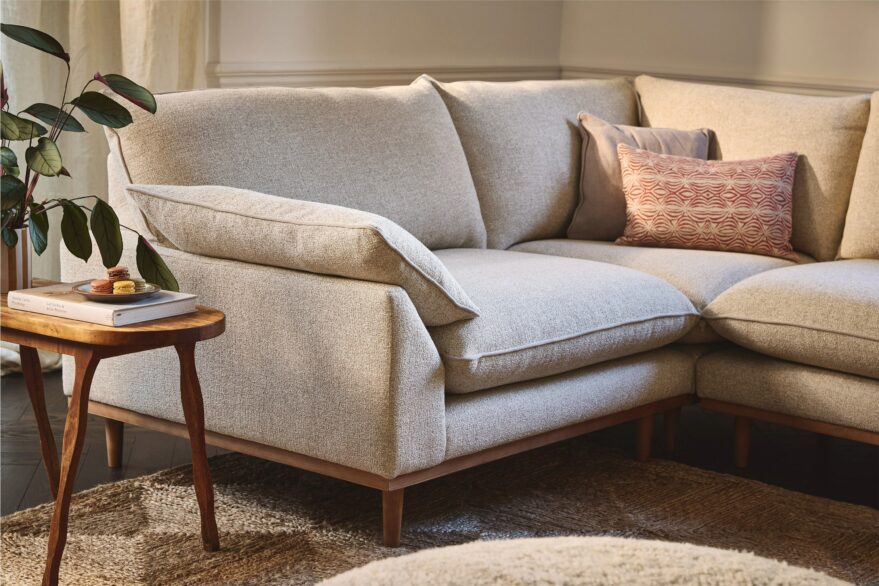
Does Your Flooring Need to Match Your Sofa?
This is something our Showroom team are often asked, and the answer is not exactly – in fact, some contrast is usually a good thing.
If your sofa and floor are too similar in colour and tonal depth, the sofa can visually disappear into the room. A little separation helps define the seating area.
A dark sofa on a dark wooden floor, for example, can work beautifully, but adding a lighter rug underneath will create definition. Similarly, a very pale sofa on light flooring can benefit from a rug with a little more depth or pattern.
Look at undertones as well as whether something is simply ‘light’ or ‘dark’. Warm oak flooring will interact differently with a cool grey sofa than with warm beige, tan, or olive upholstery.
You don’t need everything to match.
You just want the colours to feel comfortable together.
Which Sofa Material Should You Choose?
Colour is only part of the decision. Your upholstery material affects how that colour looks, feels and lives in your home.
| Material | How colour appears | Feel | Consider |
|---|---|---|---|
| Leather | Can develop depth and character over time | Smooth and tactile | Different leather finishes age differently |
| Fabric | Huge variety of colours and textures | Soft and versatile | Practicality varies by fabric |
| Velvet | Rich, with colour changing subtly in the light | Soft and tactile | Pile gives deeper shades extra dimension |
Leather Sofas
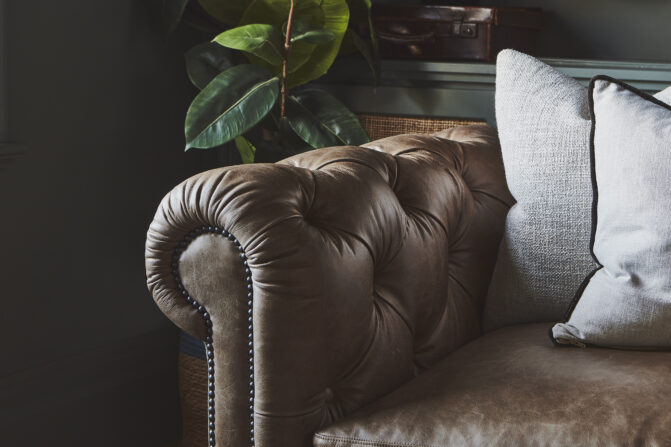
Leather brings its own natural character to colour. Tan and brown are obvious classics, but grey, black, cream and coloured leathers can create very different looks.
Depending on the leather type, natural variations may be visible, and some finishes develop a patina, subtle changes in colour and character created through use over time.
Fabric Sofas
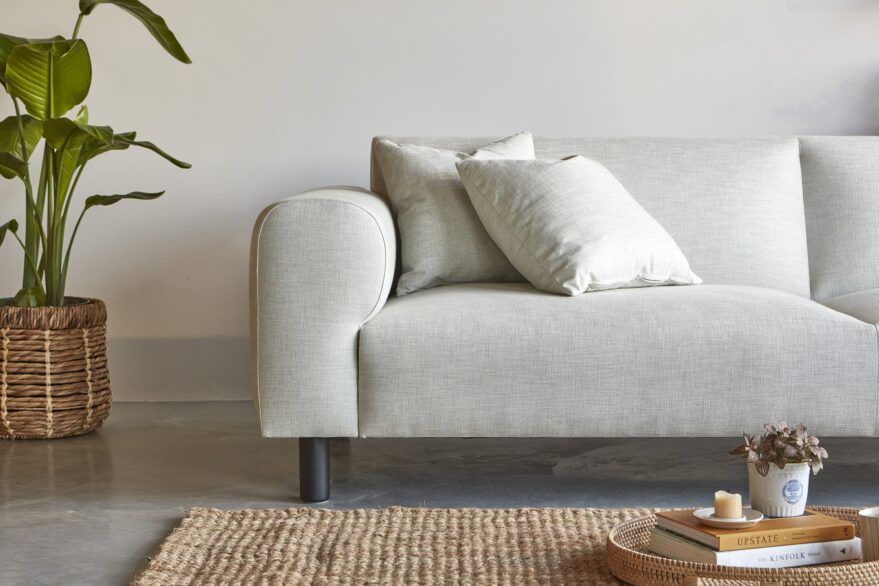
Fabric gives you an enormous amount of choice, from tactile weaves and linens to hard-wearing, family-friendly options.
The texture of the fabric can change how a colour reads too. A heavily textured weave will often make a shade feel softer than the same colour on a smoother material.
Velvet Sofas
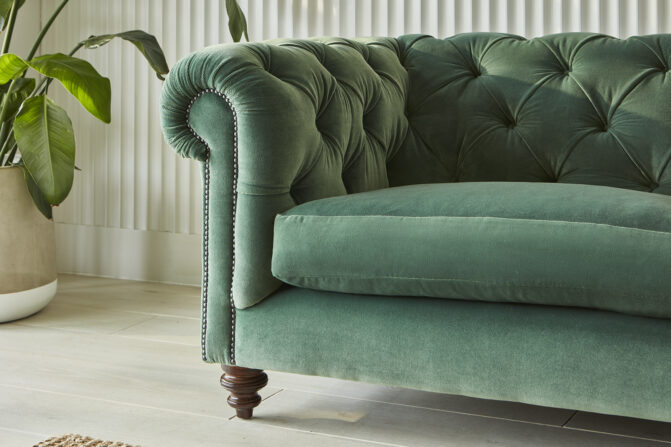
Fabric gives you an enormous amount of choice, from tactile weaves and linens to hard-wearing family-friendly options.
The texture of the fabric can change how a colour reads too. A heavily textured weave will often make a shade feel softer than the same colour on a smoother material.
Sofa Colour Ideas: Finding Your Shade
Once you’ve considered your room, lifestyle and material, you can start thinking about the colour itself.
The reality is that there’s no single best sofa colour for every home. The aim is to find one that works with your space, your personality and is a shade you’ll enjoy seeing every day.
Cream and beige are useful if you want your sofa to provide a calm backdrop rather than dominate the room.
Cream and Beige: Warm, Versatile Neutrals
They work particularly well with warm whites, taupe, natural timber, and earthy greens, but their neutrality also means you can completely change the room’s character with cushions, rugs, and accessories.
For a neutral interior, use different textures and slightly varying shades rather than trying to match everything exactly. This will stop the room from feeling flat.
Browse our Cream and Beige Sofas or explore our read more in our guide on cream leather sofas.
Grey: A Flexible Contemporary Neutral
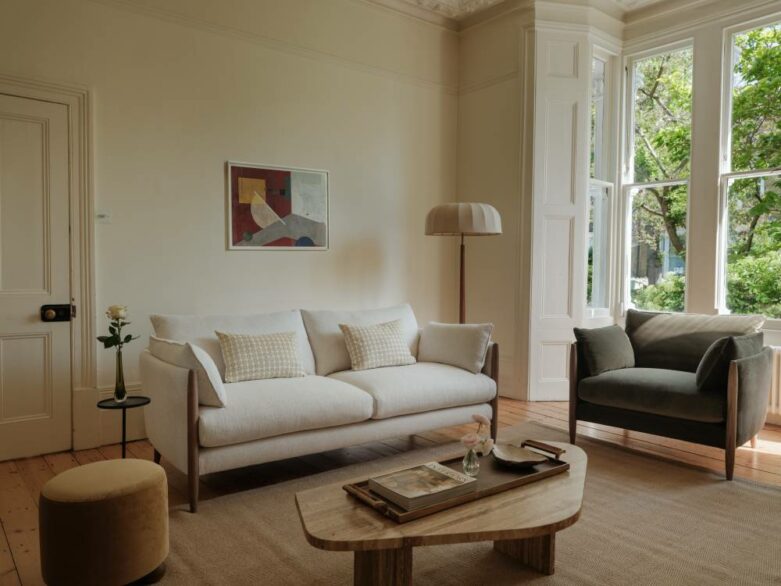
Grey remains an incredibly versatile sofa colour, but rather than treating it as the default choice, consider its undertone.
Cooler greys naturally suit blues, crisp whites and charcoal, while warmer greys work beautifully with cream, taupe, natural timber, green and muted pink.
If your room receives limited natural light, test your chosen grey carefully. Some cooler shades can look considerably darker away from the bright lighting of a showroom.
Explore our Grey Sofas or discover more in our Grey Sofa Guide.
Brown and Tan: Warm and Timeless
Brown and tan instantly warm a room and pair particularly well with natural materials.
Tan is surprisingly versatile, pairing with cream, warm white, sage, navy and terracotta, while deeper browns work beautifully with lighter neutrals, greens and blues.
Leather is an obvious choice for this palette, particularly if you like the idea of a sofa developing additional character as it ages.
Read more about our leather sofa colours or browse our range of brown and tan sofas.
Black: Strong and Sophisticated
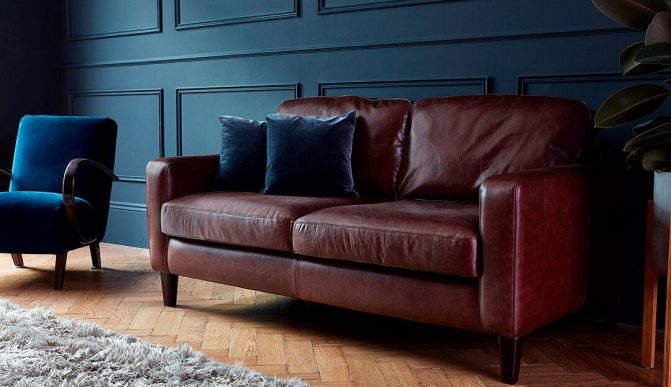
A black sofa can act as an anchor within a room, giving definition to a neutral or colourful scheme.
Pair it with warm wood, cream, stone, and tactile fabrics to soften the contrast, or go for a stronger contemporary look with monochrome elements and deeper wall colours.
Black doesn’t automatically make a room feel smaller, but a large black sofa will have considerable visual weight. In a compact space, balance it with lighter flooring, walls or a contrasting rug.
Green: Relaxed or Dramatic
Green can be wonderfully easy to decorate around because so many shades have a natural, grounding quality.
Sage and olive create softer, earthier schemes, while rich forest and emerald green can make the sofa much more of a statement.
Green works beautifully with natural timber, cream, beige and warm metallics, while pink and terracotta can provide a more colourful contrast.
Explore our green sofa range or find out more about styling green sofas in our guide.
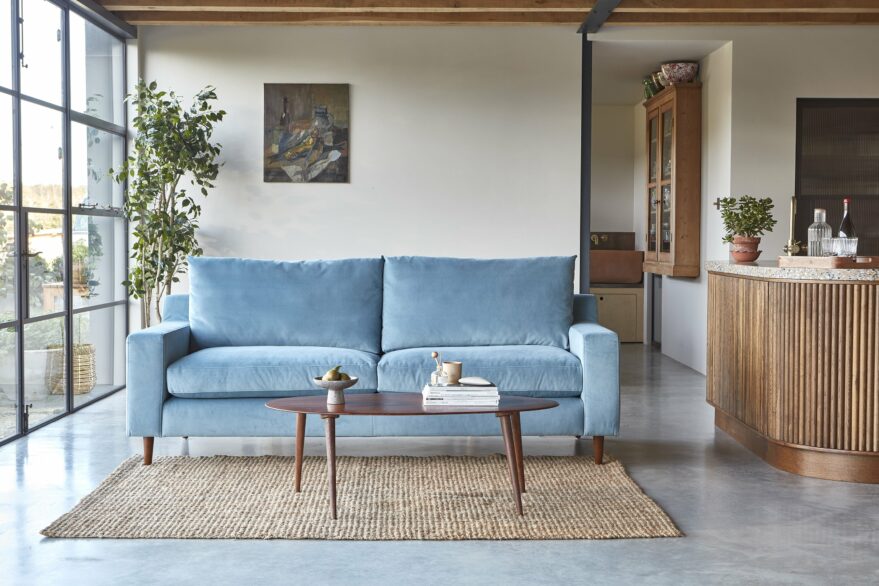
Blue and Navy: Calm and Easy to Live With
From pale blue to deep navy, blue is one of the most adaptable colour families.
Navy can work almost like a neutral, sitting comfortably alongside warm white, cream, tan and natural timber. Lighter blues create a softer, more relaxed feel.
If you’re choosing a very dark navy sofa for a smaller room, use lighter elements elsewhere to prevent the seating area from becoming visually heavy.
Browse our blue and navy sofas or read more about decorating with a teal sofa in our guide.
Pink: Softer Than You Might Think
Pink doesn’t have to mean bright or overtly feminine
Blush and dusty pink can behave almost like warm neutrals, pairing well with cream, taupe, green, navy, and natural timber. Richer berry and brighter pinks create a much stronger focal point.
The key is choosing a pink that feels at home with the rest of your palette, not one you pick because it’s currently fashionable.
Discover more about pink sofas for your living room in our guide or browse our range of pink sofas.
Red: Rich and Confident
A red sofa naturally attracts attention, but there is a considerable difference between warm rust, deep burgundy and bright scarlet.
Deeper reds pair beautifully with warm neutrals, navy and forest green, while rust works particularly well with cream, timber and earthy shades.
If you love red but worry about overpowering the room, choose a deeper or more muted shade rather than abandoning the colour altogether.
Explore our range of red sofas or learn more about styling a red sofa in your living room in our guide.
Purple: Individual and Characterful
Purple can range from soft heather and muted mauve through to rich plum and aubergine, so it doesn’t have to mean a highly dramatic interior.
Softer purples work with warm neutrals and grey, while deeper shades can look beautiful alongside cream, dark timber and warm metallics.
As with any richer colour, consider your natural light before committing to a particularly deep shade.
Browse our characterful purple sofa range.

Yellow and Mustard: Warm and Uplifting
Yellow brings warmth and personality into a living room, with mustard and ochre offering particularly liveable alternatives to brighter citrus shades.
Grey, navy and warm neutrals are reliable partners, while teal, brown and green create richer colour combinations.
If you’re considering mustard, our dedicated guide explores which colours pair with a mustard sofa and how different combinations change a room’s feel.
Discover more about mustard and yellow sofas in our guide or browse our range.
What Colour Sofa Goes With Everything?
If flexibility is your priority and you’re looking for the best sofa colour combinations, consider warm neutrals such as beige, cream, taupe, and some greys, as these are among the easiest colours to redecorate around. But that doesn’t automatically make them the right choice.
Tan leather, navy, and muted green can also behave much like neutrals when used thoughtfully, while adding a little more colour and character.
Instead of searching for a shade that literally ‘goes with everything’, think about the colours you’re consistently drawn to. If your home is full of warm timber and earthy tones, for example, a cool grey may actually be less adaptable for you than tan, olive or warm beige.
Does a Dark Sofa Make a Room Look Smaller?
Not necessarily but it’s something to be mindful of.
A large dark sofa can have greater visual weight than a pale one, but the size of the sofa, room layout, flooring, wall colour and amount of natural light all affect how spacious the room feels.
In a smaller living room, create contrast around a dark sofa with lighter walls, a pale or patterned rug and plenty of natural light.
A well-proportioned dark sofa can give a small room a strong focal point rather than making it feel cramped.

What Sofa Colour Is Best With Pets and Children?
No single colour guarantees an easy life, but your household should influence your choice.
Very pale upholstery may make some everyday marks more noticeable, while extremely dark colours can highlight pale pet hair and dust. Mid-tone shades and subtly textured fabrics can often be more forgiving.
Pattern and texture can help too, but colour shouldn’t be considered separately from the upholstery itself. A practical fabric in cream may suit your household better than a less forgiving material in a darker shade.
Think about how the sofa will actually be used rather than choosing solely on appearance.
Will a Bright Sofa Date?
A bold sofa isn’t destined to date simply because it’s colourful.
The bigger question is whether you genuinely love the colour or are choosing it because it happens to be fashionable at the moment.
If you’ve consistently gravitated towards green, blue, pink or mustard for years, you’re far more likely to enjoy living with it long term than if you’re responding to a short-lived trend.
The sofa shape matters too. A timeless silhouette in a strong colour can be easier to live with over time than an extremely trend-led design in a supposedly ‘safe’ neutral.
And remember that the surrounding room is easier to change. Walls can be repainted, cushions replaced, and rugs updated without changing the sofa itself.

Think About the Next Ten Years, Not Just Today
A well-made sofa is a considered purchase, so think beyond how the room looks right now.
Are you likely to move? Will your family change? Do you regularly redecorate? Would the sofa work with another wall colour or flooring type?
This doesn’t mean you have to choose the safest possible shade. It simply means understanding what you’re committing to.
A neutral gives you more freedom to reinvent the room around it, while a strong colour can give your home a sense of personality that a safer choice never quite achieves.
The best sofa colour is ultimately the one that balances both.
See Your Sofa Colour at Home Before Deciding
Choosing a sofa colour is much easier when you stop looking at it on a screen and start seeing it in your actual room.
Order samples of your shortlisted fabrics and place them beside your flooring, walls, curtains and existing furniture. Check them in natural light during the day and under your usual lighting at night.
Once you’ve narrowed down the palette, visit a showroom if you’d like to see larger areas of upholstery and compare different materials and sofa styles in person.
Your sofa will be part of your home for years, so there’s no need to rush the decision.
Order free fabric and leather samples, find your nearest Darlings of Chelsea showroom, or browse our sofas by colour to start narrowing down your favourites.
Looking for ideas on how to style your home with a handcrafted Darlings of Chelsea sofa? Browse our latest guides for more tips and interior ideas.


