


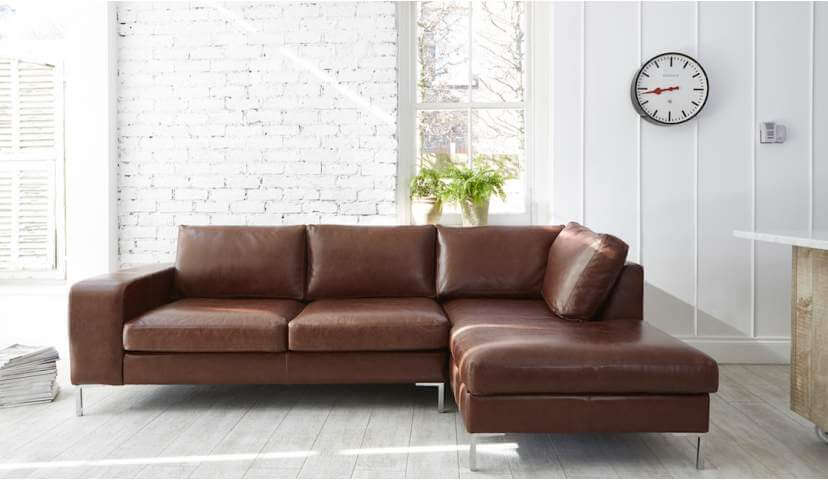
Leather Sofa Colours: How to Choose the Right Shade for Your Living Room
Choosing leather sofa colours isn’t just about selecting a shade that you like best. It’s important to consider the natural light in your living room, as well as your flooring, wall colours, the size of the space, and how you want your sofa to look as it ages.
Different leather colours can create dramatically different results. Tan and brown bring warmth and work well alongside natural, earthy palettes. Black creates definition and drama, while grey offers a softer, more contemporary feel.
Lighter cream and off-white leathers can make a room feel airy and elegant, while deeper or more unusual colours can make your sofa a real focal point.
With so much to consider, we advise, as ever, that you start by thinking about your room as a whole, rather than focusing on your sofa colour in isolation. That way, you will end up with a sofa that feels right at home from the moment it arrives.
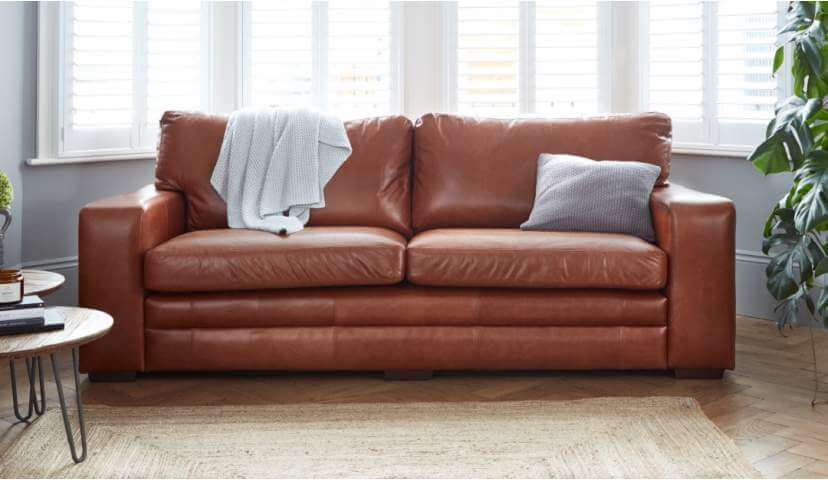
Tan Leather Sofa Colour Schemes
Tan leather is a wonderfully rich colour. Warm, versatile, and full of character, it works just as comfortably in a contemporary living room as in a more traditional space.
The beauty of a tan leather sofa colour scheme is that tan behaves almost like a neutral, while still introducing plenty of depth.
What Colour Goes With a Tan Leather Sofa?
For a relaxed, natural scheme, pair tan leather with warm white or soft cream walls, timber furniture and touches of sage or olive green. Terracotta, rust and ochre can reinforce its warmer undertones, while navy or deep blue creates a stronger contrast.
If you prefer a contemporary look, keep the wider palette simple. Warm white walls, a textured neutral rug and black or dark metal accents can make tan leather feel clean and modern.
Don’t forget flooring. Tan works particularly well with timber, but if both the sofa and floor have similar warm tones, use a contrasting rug to visually separate them.
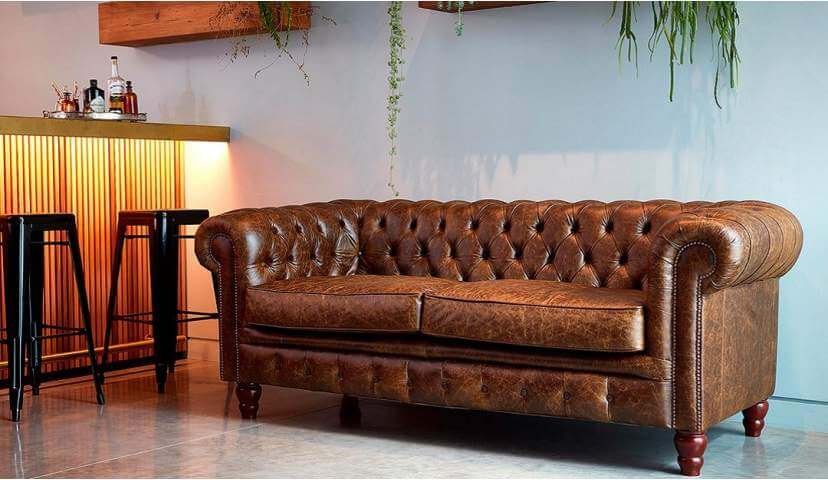
Brown Leather Sofa Living Room Ideas
Brown leather has lasting appeal for good reason. It brings depth and warmth to a room and comes in everything from lighter caramel and chestnut tones to deep chocolate brown.
Rather than linking this section solely to an individual Chesterfield range, it should lead readers directly to the wider brown leather collection.
H2 – What Colours Go With a Brown Leather Sofa?
Warm neutrals are an easy place to start. Cream, oatmeal, stone and beige soften dark brown leather and create a relaxed, layered scheme.
Green also sits naturally alongside brown. Sage and olive create a softer look, while forest green gives dark brown leather a richer, more enveloping backdrop.
For contrast, consider blue. Muted blue-grey can make brown feel lighter, while navy creates a smart, sophisticated pairing.
If you have a particularly dark brown sofa, bring lighter colours and tactile surfaces into the rest of the room. A pale rug, textured cushions and warm walls can prevent the sofa from visually weighing down the space.

Black Leather Sofa Living Room Ideas
A black leather sofa is a bold choice and makes an immediate statement. Strong, sophisticated and surprisingly easy to build a palette around, it can suit everything from an industrial-inspired interior to a much softer contemporary scheme.
The key with styling is contrast.
If you have a smaller living room, pale walls and flooring will prevent a large black sofa from feeling too dominant. Warm woods, cream rugs and tactile cushions can also soften the crispness of black leather.
In a larger or naturally bright room, you can afford to be more adventurous. Deep green, charcoal and navy walls can create a cocooning effect, while brass, glass and natural timber introduce warmth and variation.
Black also works particularly well as a colour anchor. Cushions, artwork and rugs in rust, ochre, green or jewel tones can all sit confidently alongside it.

Grey Leather Sofa Living Room Ideas
If you like the versatility of black but want something a little softer, grey leather is an excellent alternative.
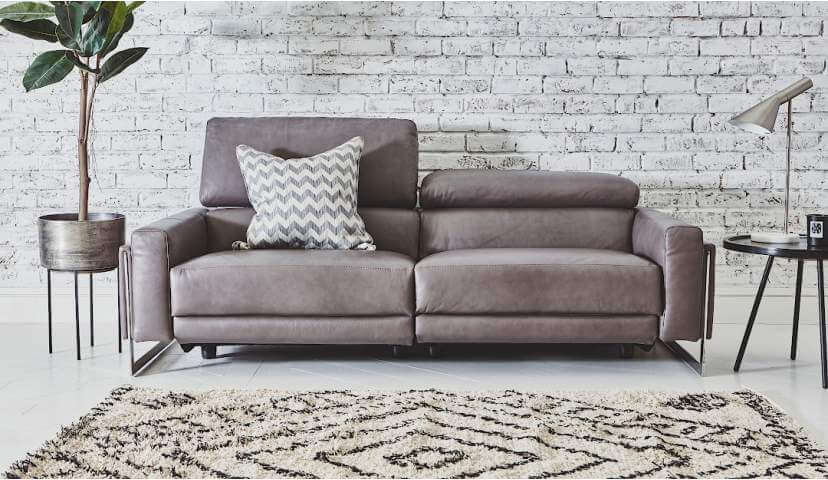
The important thing is to identify its undertone. Cooler greys work naturally with crisp white, blue, and charcoal, whereas warmer greys pair well with taupe, cream, muted pink, and natural timber.
For a contemporary grey leather sofa living room, layer several shades rather than matching everything precisely. A pale grey rug, warm off-white walls and darker charcoal accessories can create depth without introducing lots of competing colours.
Alternatively, use grey as a neutral backdrop for more colour. Sage, navy, ochre and muted blush can all bring warmth and personality to the room.

Cream and Off-White Leather Sofas
Cream and off-white leather can make a living room feel wonderfully light and spacious.
Rather than surrounding a pale sofa with exactly matching cream walls and accessories, introduce tonal variation. Warm white, oatmeal, taupe and beige create a layered neutral scheme, while different materials prevent it from feeling flat.
Natural timber, wool, linen and woven textures work particularly well here.
For more contrast, introduce sage or olive green, navy or terracotta. These colours provide definition without taking away from the calm quality of the lighter leather.
There is a practical consideration too. Pale leather can make marks and colour transfer more noticeable than mid-tone or darker shades, so consider how you’ll use your sofa, not just how it looks.
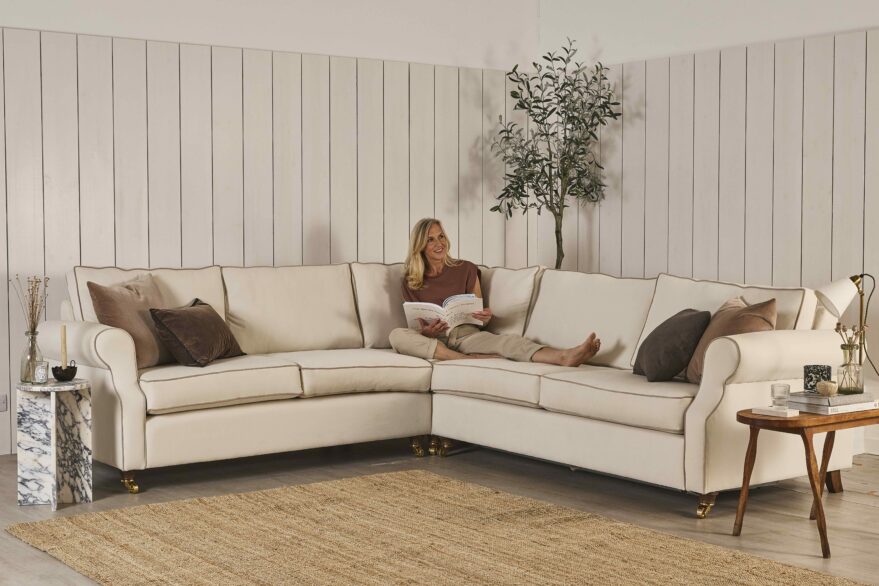
What About White, Navy or Green Leather?
If you’re looking beyond classic neutrals, coloured leather can give a living room a very different character.
White leather creates a particularly clean, crisp look but needs careful styling to avoid making the room feel stark. Introduce warmth through timber, rugs, cushions and other tactile materials.
Navy offers much of the versatility of a neutral while feeling a little less expected than black or brown. It works beautifully with warm white, tan, timber and brass.
Green leather can be equally characterful. Deep olive and forest shades sit naturally alongside wood, cream and warm metallic finishes and can work particularly well in traditional or heritage-inspired interiors.
Availability changes, however, so we’d always recommend checking the current leather collection rather than choosing a sofa around a colour that may not be offered on your preferred model.
Choosing a Leather Sofa Colour for Your Natural Light
A leather sample viewed online won’t necessarily look exactly the same in your living room. This is why we encourage all our customers to order free samples, as it lets you place the leathers in situ and feel them.
Natural light significantly affects colour. In a north-facing room, cooler light can make grey and pale neutral leathers appear cooler, so warmer tans, browns and creams can help introduce warmth.
South-facing rooms generally receive warmer, brighter light, giving you greater freedom to experiment with both cool and dark shades.
The amount of light matters too. A large dark sofa in a room with small windows can have far more visual impact than the same sofa in a bright, open-plan space.
Before deciding, order leather samples and look at them in the room at different times of day. Put them alongside your flooring, wall colour and existing furniture rather than viewing them in isolation.
Choosing between two or three shades? Order up to eight free fabric and leather samples and see how they look in your own home.
Choosing a Leather Sofa Colour for a Small Living Room
You don’t automatically need a pale sofa in a small living room.
A darker sofa can create a strong focal point and add definition to the room. However, if the sofa is particularly large for the space, a lighter or mid-tone leather can reduce its visual weight.
Think about contrast too. A dark brown sofa against an equally dark floor can appear heavier, whereas a pale rug underneath it creates separation and makes the seating area feel more defined.
Similarly, a cream sofa against cream walls can almost disappear into its surroundings, helping create a sense of space; but you’ll need texture and tonal variation to prevent the room from looking flat.
Which Leather Sofa Colours Are Easiest to Live With?
Colour isn’t only an aesthetic decision. Think about your household and what your sofa is likely to encounter every day.
Mid-tone tans, browns and greys can be forgiving choices because minor marks, dust and everyday wear tend to be less immediately obvious than they are against very pale or very dark surfaces.
Black leather can show pale pet hair and dust more readily, while cream and other light shades can make marks and dye transfer easier to see. If you regularly wear dark or new denim, for example, it’s sensible to be particularly careful around pale upholstery.
The leather finish matters as much as the colour. More protected leathers are designed with everyday practicality in mind, while more natural finishes may show variations, marks and changes in character more readily.
This isn’t necessarily a disadvantage. It comes down to whether you want your leather to remain relatively uniform or prefer a surface that develops more individual character over time.
How Leather Colour Changes Over Time
Not all leather ages in the same way, which is one of the most important considerations when choosing both a colour and leather type.
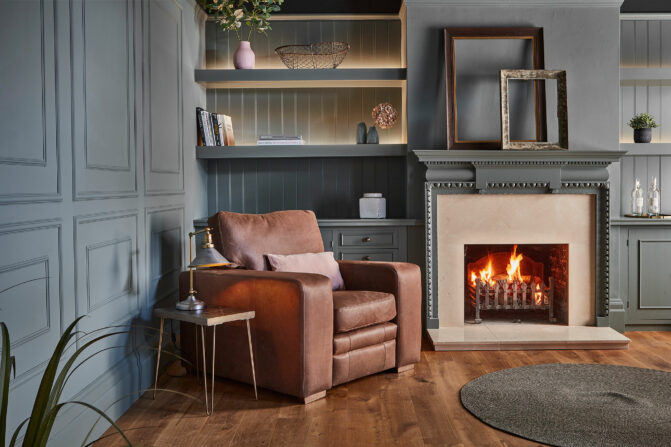
Aniline leather is coloured with transparent dyes and has minimal surface coating. This lets more of the hide’s natural grain and character remain visible. As it is used, it can develop a patina – subtle changes in colour, sheen and character that make the leather increasingly individual.
Distressed and other natural-looking leathers can similarly celebrate variations and signs of use rather than trying to disguise them.
Semi-aniline leather adds a light protective finish while retaining much of leather’s natural appearance, balancing character and practicality.
More protected or pigmented leathers have a stronger surface finish, helping provide greater colour consistency and resistance to everyday wear.
This means two sofas in a similar shade can behave quite differently over their lifetime depending on the leather you choose.
If you love the idea of a tan or brown sofa becoming richer and more characterful with use, a more natural leather may appeal. If maintaining a more consistent colour is the priority, a more protected finish may suit your home better.
What Colour Leather Sofa Should I Buy?
Instead of asking which colour is the most fashionable, ask yourself four questions:
- Is my room naturally light or dark? This will affect how deep colours appear.
- What undertones already exist? Look at your flooring, walls and wooden furniture.
- Do I want my sofa to blend in or become the focal point? A cream or grey sofa can sit quietly within a scheme; black or a rich colour creates greater contrast.
- How do I want the leather to age? Consider both colour and leather finish rather than treating them as separate decisions.
Most importantly, see the leather at home before you commit. Computer and phone screens can’t reproduce every colour variation, and natural leather can vary.
Find the Right Leather Colour for Your Home
The right leather sofa colour should work with more than today’s decorating scheme. Consider the light in your room, the colours already around it and how much contrast you want your sofa to create. Then think about the leather itself and whether you’d prefer a finish that develops individual character or remains more consistent over time.
From warm tan and classic brown to contemporary grey, bold black, and lighter neutrals, no single shade works for every home, but seeing them in your own space makes the decision much easier.
Explore our leather sofa collection to compare styles and finishes or order up to eight free leather samples to see how different shades work with your flooring, walls and natural light before you decide.
Leather Sofa Colour FAQs
What colour goes with a tan leather sofa?
Warm white, cream, sage, olive, navy and earthy shades such as terracotta all work beautifully with tan leather. For an easy, timeless scheme, combine a tan sofa with warm neutral walls, natural timber and touches of green.
Can you change the colour of a leather sofa?
Leather can sometimes be professionally recoloured or restored, but the result depends on the leather’s type, finish and condition. We don’t recommend treating it as a simple DIY colour change, so seek specialist advice before applying dyes or colourants.
What colour leather sofa is best for a small living room?
There is no single best colour, but lighter and mid-tone leathers can reduce the visual weight of a large sofa in a compact room. Dark leather can still work beautifully if you balance it with lighter walls, flooring or a contrasting rug.
Do light-coloured leather sofas show marks more than dark ones?
Some marks and dye transfer can be more noticeable on cream, white and other pale leathers. However, a sofa’s practicality also depends on the leather type and finish, so consider colour and protection level together.
Which leather sofa colour dates the least?
Tan, brown, black, grey and cream are all established neutral choices rather than colours tied to one interior trend. The better question is which shade works naturally with your room, as a colour that complements your flooring, light and existing palette is likely to be easier to live with long term.
Browse our latest blogs to help you find the perfect sofa for your lifestyle.


